Sustainable Gardening as a Career Skill
Why sustainable gardening is now a core professional skill, and how to build it deliberately in your career.
Sustainability is no longer a niche interest in horticulture; it is a core professional skill. Clients, employers and regulators increasingly expect gardens and landscapes to be environmentally thoughtful, and the people who can deliver that are more employable.
What sustainable gardening means in practice
It is not a single technique but a set of choices: working with the site and climate, reducing inputs, supporting wildlife, and managing soil and water responsibly. Done well, it produces gardens that are both beautiful and lower-maintenance.
The skills employers value
- Soil-first thinking — feeding the soil, minimising cultivation, protecting structure.
- Plant choice for the future — species suited to a site and a changing climate.
- Water-wise design — irrigation that conserves, rainwater capture, drought-tolerant planting.
- Peat-free growing — increasingly expected across the industry and by clients.
- Integrated pest management — preventing problems through good practice before reaching for controls.
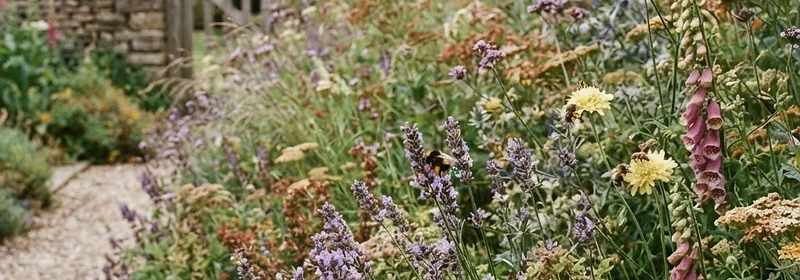
- Biodiversity-led planting — supporting pollinators, birds and invertebrates.
Why it helps your career
These are not fringe skills; they are becoming the default. A gardener or designer who can deliver a wildlife-rich, low-input, climate-appropriate garden is more useful to an employer and more attractive to clients than one who cannot.
How to build the knowledge
- Read widely from reputable sources, the RHS, conservation charities and trade bodies publish accessible guidance.
- Experiment at home or on a volunteer plot. Practical experience beats theory.
- Reflect it in your work. Bring peat-free compost, mulching and drought-tolerant choices into the gardens you manage.
- Talk about it honestly. Clients appreciate a gardener who can explain sustainable choices in plain terms.
Avoiding greenwashing
Real sustainability is specific, not a label. Avoid claims you cannot back, and be honest about trade-offs. A garden that looks wild but needs heavy irrigation is not sustainable. The credibility is in the detail.
A career advantage, not a cost
Sustainable practice is often associated with lower long-term costs, less waste and more resilient gardens. For employers and clients, that is good value. For your career, it is a genuine differentiator that grows more relevant every year.
The bottom line
Treat sustainable gardening as a practical, evolving skill set. Build it deliberately, apply it consistently, and it becomes one of the things that makes you a more capable, more employable professional.
Relevant job opportunities
All jobsBuild the skills employers want
Explore qualifications and training that support a career in the green industry.
- RHS Level 2 Certificate in Practical Horticulture — Royal Horticultural Society · 2
- RHS Level 3 Certificate in Horticulture — Royal Horticultural Society · 3
- NPTC City & Guilds CS30 — Chainsaw Maintenance & Cross-Cutting — City & Guilds Land Based Services · 2
Related career advice




Ready to take the next step?
Create a free profile to apply for roles and get found by specialist employers.