
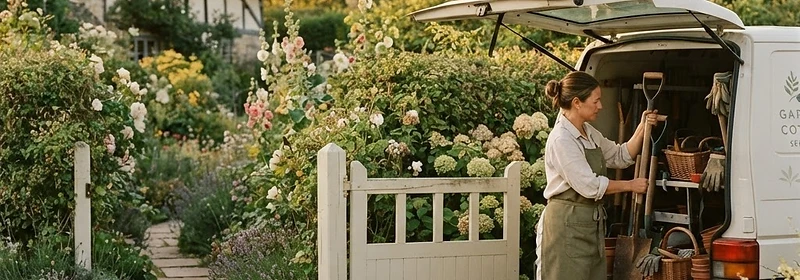
Starting your own gardening business: a practical first year
Going self-employed as a gardener is rewarding and flexible, but the first year is about steady ground, not rapid growth.
Running your own gardening business offers autonomy and, eventually, strong earnings. The first year, though, is less about scaling and more about building reliable foundations: legal standing, the right clients, the right tools, and accurate records.
Get the basics in order
Before your first paying customer, set up the legal and financial scaffolding. This is unglamorous but prevents expensive problems later.
- Register as self-employed with HMRC and keep a separate business bank account from day one.
- Public liability insurance is non-negotiable; most domestic clients expect to see evidence.
- A simple invoicing and mileage log. Free accounting apps handle this; the discipline of logging every trip and receipt is what matters.
- Waste carrier registration if you transport green waste commercially.
Define what you do (and don't)
The most common early mistake is saying yes to everything. A clear service description, for example maintenance rounds, border renovation, or soft landscaping, lets you price accurately and quote confidently. Decide your minimum visit value and your travel radius, and stick to them.
Building a round
Aim for regular, recurring work rather than one-off jobs in year one. A weekly or fortnightly maintenance round is the financial backbone of most successful solo businesses.
- Start with a realistic target. Ten to fifteen regular clients is a sustainable first-year round for one person.
- Concentrate geographically. Cluster clients within a tight radius to minimise unpaid travel time.
- Price for profit, not for the job. Calculate your hourly rate to cover time, travel, equipment, holidays and a margin.
- Be dependable. Reliability is the single trait that retains clients and generates referrals.
Tools and transport
Buy quality where it counts, a professional mower, well-maintained hand tools, a reliable van, and second-hand everything else at the start. Service machinery on a schedule; a broken mower on a Monday costs you a day's income.
Finding clients
- Word of mouth will become your strongest source, but it needs a seed.
- A simple website with photos of your work, the areas you cover and a clear contact method.
- Local noticeboards and parish magazines still work in many areas.
- One or two good reviews on Google are worth more than a dozen paid adverts.
Knowing your numbers
Track income and expenditure monthly, set aside a percentage for tax from every invoice, and review your pricing every quarter. Many solo gardeners undercharge for years because they never re-examine their rate once it is set.
When to grow
Year two is when most successful solo gardeners consider taking on an apprentice, a part-time helper, or a second van. Resist pressure to expand before your round and your pricing are stable. A reliable one-person business earning well beats a stretched two-van operation that is always chasing cash.
The first year, in one line
Get organised, build a tight, recurring round, charge properly, and let reputation do your marketing.
Relevant job opportunities
All jobsBuild the skills employers want
Explore qualifications and training that support a career in the green industry.
- RHS Level 2 Certificate in Practical Horticulture — Royal Horticultural Society · 2
- RHS Level 3 Certificate in Horticulture — Royal Horticultural Society · 3
- NPTC City & Guilds CS30 — Chainsaw Maintenance & Cross-Cutting — City & Guilds Land Based Services · 2
Related career advice





Ready to take the next step?
Create a free profile to apply for roles and get found by specialist employers.