

How to Build a Professional Horticultural Portfolio
How to build a professional horticultural or garden design portfolio, even early in your career.
For designers, senior gardeners and anyone whose work is visual, a portfolio matters as much as a CV. It shows what you can actually do, in a form employers and clients can judge quickly.
What a portfolio should show
Aim for quality over quantity. A handful of well-presented projects beats dozens of unclear photos. For each project include:
- Before and after images of the same view.
- A short description — the brief, your approach and the outcome.
- Your role — what you designed, built or maintained.
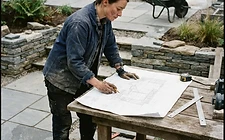
- A plan or sketch where relevant.
Formats
- A simple website is the most accessible format and the easiest to share.
- A PDF is useful for applications and interviews; keep it under a few MB.
- A printed book is occasionally expected for design interviews.
- An Instagram feed works well as an informal, ongoing portfolio.
Choose the format that fits the work and the audience, and keep it current.
If you are early in your career
You will not have years of professional projects, and that is fine. Build a portfolio from:
- Personal or home projects — your own garden, an allotment, a friend’s border.
- Volunteer work — community gardens, school grounds, park projects.
- College or course work — design plans, planting schemes, assessments.
- Details and close-ups — showing craft and attention.
What matters is that the work is genuinely yours and presented honestly.
Presentation principles
- Consistent framing and lighting wherever possible.
- Clear captions — place, date, your role.
- Honesty — do not claim credit for others’ work.
- Editing — remove older or weaker pieces as better ones arrive.
Using it well
Refer to your portfolio in applications and bring it (on a tablet or in print) to interviews. Tailor which projects you show to the employer: a heritage garden, a design practice and a landscaping contractor each want to see different things.
The long view
A portfolio grows with you. Keep photographing your work as you go, and revisit it twice a year to add your best new pieces and retire the old ones. Over time it becomes one of your most valuable professional assets.
Relevant job opportunities
All jobsBuild the skills employers want
Explore qualifications and training that support a career in the green industry.
- RHS Level 2 Certificate in Practical Horticulture — Royal Horticultural Society · 2
- RHS Level 3 Certificate in Horticulture — Royal Horticultural Society · 3
- NPTC City & Guilds CS30 — Chainsaw Maintenance & Cross-Cutting — City & Guilds Land Based Services · 2
Related career advice



Ready to take the next step?
Create a free profile to apply for roles and get found by specialist employers.