
Exploring Careers in Arboriculture
A clear introduction to careers in arboriculture, the roles, the ticket ladder, and who employs tree professionals.
Arboriculture is the care of trees, and it is one of the most skilled and best-paid parts of the green industry. It blends technical climbing, machinery, science and a strong safety culture.
What arboriculturists do
The field covers two related strands:
- Tree surgery / practical arboriculture — pruning, felling, dismantling and reducing trees, often at height.
- Arboricultural consultancy — surveying trees, assessing risk and advising on planning, health and management.
Most careers start in the practical strand and move toward consultancy with experience and further qualifications.
The role of a tree surgeon
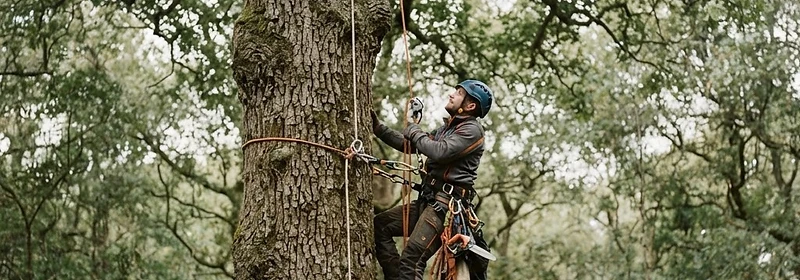
Tree surgeons work at height using ropes and harnesses, and on the ground with chainsaws, chippers and lowering equipment. It is physical, technical and demanding, with a strong emphasis on safety at every step.
The role of a consultant
Consultants produce tree surveys, condition reports and management plans, often for planning applications, estates or insurance. The work is office-and-site based, less physical and more analytical.
The qualifications ladder
Arboriculture has a clear certification route, primarily through NPTC (assessed via City & Guilds):
- CS30 — chainsaw maintenance and cross-cutting.
- CS31 — felling small trees.
- CS38 — climbing and aerial rescue.
- CS39 — using a chainsaw from a rope and harness.
Higher units cover rigging, aerial pruning and specialist dismantling. A valid first-aid certificate and a medical are required alongside the climbing units.
Consultancy roles usually build on these with professional qualifications such as the AA Technician Certificate (Cert Arb) and, for the most senior, the AA Professional Diploma (Dip Arb).
Who employs arborists
- Specialist tree contracting firms.
- Local authorities — inspecting and managing the public tree stock.
- Estates and landowners.
- Utility companies — clearing vegetation near lines.
- Consultancies — advising on development and planning.
Is it for you?
Practical arboriculture suits people who are comfortable at height, meticulous about safety, and happy with physical, outdoor work. Consultancy suits those who enjoy written analysis and client advice. Many enjoy moving between the two over a career.
A note on accuracy
Unit numbers and awarding arrangements change. Confirm current requirements with the Arboricultural Association or a registered training provider before booking any course.
Relevant job opportunities
All jobsBuild the skills employers want
Explore qualifications and training that support a career in the green industry.
- RHS Level 2 Certificate in Practical Horticulture — Royal Horticultural Society · 2
- RHS Level 3 Certificate in Horticulture — Royal Horticultural Society · 3
- NPTC City & Guilds CS30 — Chainsaw Maintenance & Cross-Cutting — City & Guilds Land Based Services · 2
Related career advice





Ready to take the next step?
Create a free profile to apply for roles and get found by specialist employers.